
Choosing a condo in Singapore for long-term value comes down to a simple but often overlooked truth: properties appreciate sustainably only when they combine location resilience, strong buyer demand, efficient layouts, reputable developers, and future-proof surrounding infrastructure.
If you focus on these fundamentals instead of chasing hype cycles, you end up with a home that not only holds its price through market fluctuations but grows steadily over 10 to 20 years.
The most successful long-term investors in Singapore do not guess; they study MRT connectivity, supply pipelines, demographic shifts, land zoning changes, rental demand, and the historical performance of projects with similar traits.
When these factors align, the condo becomes more than just shelter; it becomes a durable financial asset that remains desirable to both buyers and tenants in every market cycle.
Understand Where Long-Term Value Comes From
Long-term value in Singapore property generally stems from five pillars. These remain valid whether the market is booming, cooling, or stabilizing.
| Pillar of Long-Term Value | Why It Matters | Real Impact Over 10+ Years |
| Connectivity | MRT networks reduce travel time and increase convenience | Higher resale demand, stronger rental market |
| Quality Developers | Reputable developers protect build quality and deliver livable spaces | Lower maintenance issues, better resale reputation |
| Supply Scarcity | Limited new land releases prevent oversupply | Helps prices remain stable or rise |
| Lifestyle Integration | Access to amenities, parks, malls, and clinics | Projects remain desirable even as buyer preferences evolve |
| Urban Planning | URA zoning dictates future value | Anticipates appreciation before it happens |
When all five align, the condo becomes a long-term asset rather than a short-lived trend.
Location Is the First and Largest Driver of Long-Term Appreciation
Location in Singapore is not just about being “central.” It is about being positioned where population demand meets limited supply. Even fringe locations grow well when supported by the right planning framework.
What to look for specifically:
- Upcoming MRT lines
Areas near new MRT stations gain steady appreciation as connectivity improves. Buyers will always pay more for reduced travel times. - Low supply of new land parcels
Regions with few GLS (Government Land Sales) plots tend to retain premium pricing. - Transformation districts
URA Master Plan zones that include business parks, lifestyle hubs, and transport interchanges show strong price trajectories.
How to check if a location is future-proof
URA’s Master Plan reveals what each district will look like in 5–15 years. This lets you identify “upward-moving areas” before prices catch up.
Why the Lentor Area Illustrates Strong Long-Term Fundamentals
The Lentor precinct has become a textbook example of long-term potential because it combines new MRT connectivity, controlled supply, and curated residential planning. A project like Lentor Gardens Residences fits into a neighbourhood strategy where every new launch is supported by walkability, greenery corridors, and new retail nodes. This is exactly how the government builds value: stable population density, efficient traffic flow, and well-distributed amenities.
Lentor was once underdeveloped, but the phased release of land parcels ensures no unstable oversupply. Each new launch complements the last, and buyers appreciate the consistency in urban design. For long-term planners, this is the type of micro-location to monitor: structured growth backed by infrastructure rather than speculative hype.
Evaluate Developer Reputation for Long-Term Structural Quality
Singapore is not a market where every building is equal. Developer strength significantly influences the resale desirability and rental endurance of a condo.
Large and respected developers maintain:
- higher construction standards
- better waterproofing and facade integrity
- efficient floor plans
- more reliable facilities management
- predictable completion timelines
Below is a simple comparison table to illustrate why top-tier developers matter:
| Factor | Reputable Developers | Lesser-Known Developers |
| Defect Rates | Low | Higher, more recurring |
| Resale Reputation | Strong | Limited visibility |
| Facility Longevity | Well-maintained | Higher deterioration |
| Rental Demand | High | Lower |
A condo built well ages better financially and physically.
Unit Layout: The Secret to Strong Rental and Resale Value
Even in a great location, a poorly designed unit loses appeal over time.
Singapore buyers value efficiency, and tenants value usability.
Key layout features that hold long-term value:
- Squarish layouts without awkward corners
- Bedrooms that fit queen-sized beds
- Kitchens with proper ventilation
- Storage spaces integrated into the design
- Good separation between living and sleeping areas
- Units that avoid direct west sun
Many older condos have functional but oversized layouts; many new ones are compact. The sweet spot is an efficient design that does not compromise liveability.
Amenities, Schools, and Daily Convenience
Singaporeans buy for convenience, and tenants rent for convenience.
Projects with integrated amenities appreciate better because they save time daily.
Strong value drivers include:
- Walking distance to supermarkets
- proximity to primary schools (especially popular ones)
- access to medical clinics, childcare, and parks
- lifestyle hubs such as malls and F&B clusters
Below is a table evaluating how each amenity contributes to long-term value:
| Amenity | Impact on Resale | Impact on Rental |
| Good Primary School | Very High | Moderate |
| MRT Station | Very High | Very High |
| Supermarkets | High | High |
| Green Spaces | High | Medium |
| Malls | Medium | High |
Families drive a large portion of resale activity, so primary schools often matter more than people first expect.
Urban Planning and Future District Transformations
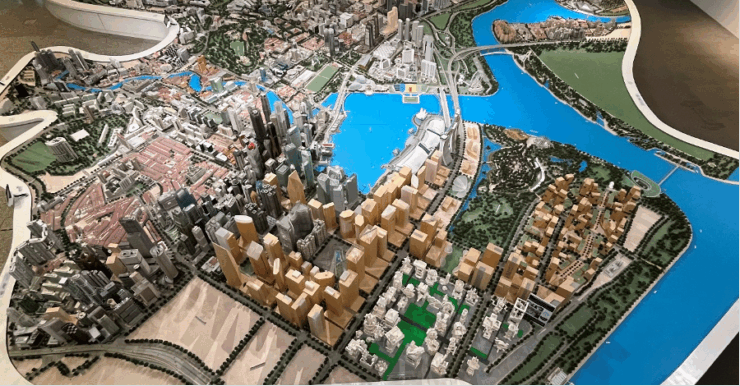
Singapore’s property market is driven by planned transformation, not accidental appreciation.
Homebuyers who study URA plans gain an advantage that compounds over time.
Watch for:
- New commercial hubs
- lifestyle districts
- eco-corridors
healthcare clusters - expansions of MRT lines
- business park developments
Many buyers underestimate how much value forms before the completion of the surrounding infrastructure. Long-term appreciation often starts the moment a district is announced for redevelopment.
A Second Example of Long-Term Appeal: The Downtown Core
The Downtown Core offers a different type of value, premium city-living demand, limited land, and strong rental resilience.
Projects like Newport Residences illustrate how freehold units in prime central areas remain high in demand even as market cycles shift. The reason is simple: the CBD and adjoining waterfront zones cannot expand endlessly. Their scarcity builds long-term desirability.
This is especially true for buyers who prioritise stable rental yields, access to major office zones, and amenity-rich surroundings. Unlike developing neighbourhoods, the CBD relies on global demand drivers, which often outperform national cycles.
Comparing Emerging vs Established Districts for Long-Term Value
The following table summarises how different types of districts behave:
| District Type | Strengths | Risks | Best Buyer Profile |
| Emerging (e.g., Lentor) | Lower entry price, large upside potential, new amenities | Slower early rental yield | Young families, long-term planners |
| Mature (e.g., established OCR/CCR) | Stable demand, high convenience | Higher entry price | Upgraders, investors |
| Prime Core (e.g., Downtown Core) | International appeal, limited supply | Price volatility in global downturns | Investors seeking rental + prestige |
Buying for long-term value is about matching your goals to the district type.
Conclusion
To choose a condo in Singapore that will genuinely grow in value over 10 to 20 years, focus on location fundamentals, future MRT connectivity, quality developers, efficient layouts, strong rental drivers, and URA-backed planning. When these come together, you are not just buying a home; you are securing a financial asset that compounds with time.
Projects in well-planned emerging areas, such as the Lentor precinct, and established prime districts like the Downtown Core, show how different types of neighbourhoods produce long-term resilience through infrastructure, scarcity, and demand. Your final decision should balance entry price, future transformation potential, and rental strength so that the property remains relevant across generations of buyers.