
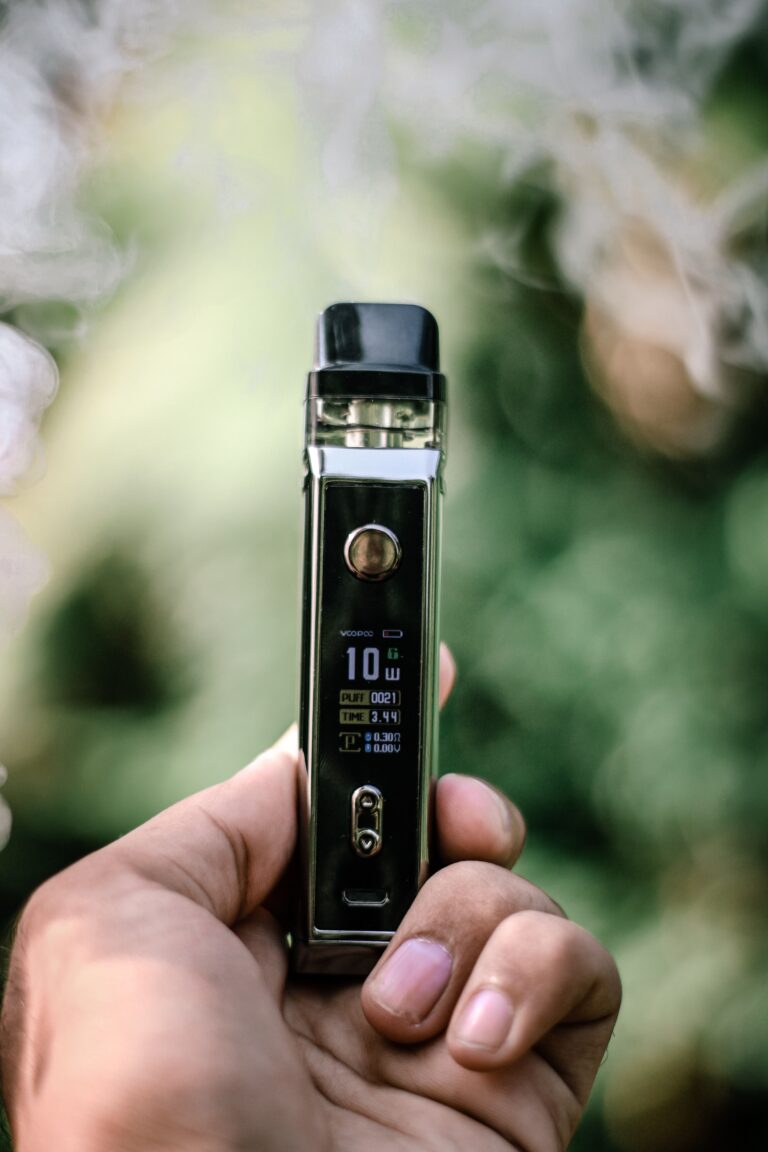
Pick up two vape cartridges that look nearly identical from the outside, and you can still end up with wildly different experiences — one hits smooth and consistent down to the last drop, the other starts tasting burnt halfway through. Often the difference isn’t the oil. It’s what’s happening inside the chamber, specifically whether the device uses a center-post design or a newer postless one.
These two terms show up constantly in cartridge and disposable vape marketing, but most people have never actually seen the difference laid out plainly. Here’s what each design does mechanically, why it matters for flavor and reliability, and how to tell which one is actually a better fit for the oil you’re using.
What Is a Center-Post Design?
Center-post hardware is the older, more familiar layout. A metal or ceramic rod runs vertically through the middle of the cartridge, from the heating coil at the bottom up toward the mouthpiece. That post does double duty: it forms part of the vapor pathway, and in many designs it also acts as an electrical contact or structural support for the coil assembly.
The catch is capillary action. Oil naturally clings to and crawls along any surface it touches, and a center post gives it a lot of surface area to cling to. Oil can migrate up the post, pool unevenly around the coil, or get drawn away from where the heating element actually needs it. Capillary action is the same physical process that lets oil wick into a coil in the first place, so it’s not inherently bad — but a center post concentrates it in a way that can leave the coil under-saturated in some spots and flooded in others.
Center-post cartridges are also the cheaper, more established option to manufacture, which is why they’ve been the industry default for years and remain widely available across almost every hardware price tier.

What Is a Postless Design?
Postless hardware removes that center rod entirely. Instead of routing vapor and structure around a post, the heating element, almost always a ceramic core, sits flush at the base of the chamber, and the vapor path is built into the body of the cartridge itself. Oil surrounds the coil directly rather than being pulled toward a column running through the center.
That change opens up a wider, more open oil chamber, which does two things at once: it lets oil settle evenly around the entire heating surface, and it removes the migration problem that a center post creates. Because there’s no post material to cling to and no narrow channel to clog, postless designs tend to handle thick, high-viscosity extracts, like live resin and live rosin, noticeably better than traditional post hardware.
Manufacturers have leaned hard into this over the past couple of years. ASM VAPE, for instance, builds its postless 510 cartridges and disposables around a ceramic heating core positioned directly at the base of the oil chamber, aiming to cut down on the metallic or burnt aftertaste that center-post coils are more prone to producing as they age.
How the Two Designs Actually Perform
On paper the differences sound subtle. In daily use, they add up:
| Factor | Center-Post | Postless |
|---|---|---|
| Oil distribution | Uneven; oil can migrate along the post | Even; oil surrounds the coil directly |
| Best for | Thinner, lower-viscosity oils | Thick extracts like live resin/rosin |
| Clogging risk | Higher, especially with viscous oil | Lower, thanks to a more open chamber |
| Flavor consistency over time | Can degrade as post residue builds up | Generally more stable puff-to-puff |
| Coil/airflow design freedom | Constrained by the post’s footprint | More room for larger or dual-coil layouts |
| Manufacturing cost & availability | Lower cost, widely available | Slightly higher cost, growing availability |
The airflow point matters more than it looks on a spec sheet. A center post physically sits in the middle of the vapor path, which can restrict how air moves around and through the coil. Postless decks let air reach the coil from underneath and around its full surface, which is a big part of why postless hardware is often described as delivering cleaner, more consistent flavor pull after pull.

Why Oil Viscosity Is the Deciding Factor
Viscosity is really what this whole comparison comes down to. Thinner distillates flow easily and wick well through almost any hardware, center post included. Thicker extracts are a different story, full-spectrum oils, live resin, and live rosin can be viscous enough that they struggle to wick evenly through a narrow post-based channel, which is exactly when clogging, dry hits, and uneven burns show up.
Postless ceramic cores are typically engineered with larger intake surfaces specifically to handle that thicker material without starving the coil. If you already know the oil you’re vaping runs thick, that’s the strongest single reason to reach for postless hardware over a traditional post design.
What the Reliability Data Actually Shows
It’s worth being honest that neither design is failure-proof, hardware quality and how well the oil matches the coil both play a bigger role than the design category alone. Recent industry benchmarking on cartridge return rates found that mid-tier ceramic wick hardware saw field return rates in the roughly 0.8%–2.5% range, compared with 2.0%–5.0% for cotton-coil cartridges. Ceramic-based postless systems tend to land on the better end of that spread, but a poorly matched oil-to-hardware pairing can still cause clogs or leaks in either design. Don’t assume “postless” automatically means zero-maintenance, it’s a meaningfully better starting point, not a guarantee.

Which One Should You Actually Buy?
A few practical rules of thumb:
- Vaping thin distillate or lower-viscosity oil? Center-post hardware will perform fine and usually costs less.
- Vaping live resin, live rosin, or anything visibly thick? Postless hardware is going to give you fewer clogged hits and more consistent flavor.
- Chasing flavor above all else? Postless designs generally win here because airflow isn’t obstructed by a post sitting in the middle of the chamber.
- Shopping on a tight budget or buying in bulk for resale? Center-post cartridges remain cheaper and more widely stocked, though that gap is narrowing as postless manufacturing scales up.
- Sourcing hardware as a brand? It’s worth asking your manufacturer directly which oils their ceramic core was tuned for, “postless” isn’t a single spec, and cores vary between suppliers.

Frequently Asked Questions
Does postless mean there’s no coil at all?
No. Postless just means there’s no center rod running through the cartridge, there’s still a heating element, almost always a ceramic core, positioned at the base of the chamber instead of built around a post.
Is postless hardware always better?
Not universally. It tends to outperform center-post designs with thick extracts and on flavor consistency, but it usually costs a bit more and isn’t as universally stocked. For thin oils, a well-made center-post cartridge can perform just as well.
Can I tell which design a cartridge uses just by looking at it?
Sometimes. If you can see a metal or ceramic rod running up the middle of the chamber when you look through the glass, it’s center-post. If the chamber looks open with the coil visible only at the base, it’s postless. Packaging and product listings usually state it outright now, since it’s become a selling point.
Does postless design reduce leaking?
Generally, yes. Because oil isn’t being pulled up along a post and pooling in unpredictable spots, postless chambers tend to hold oil more evenly, which lowers, though doesn’t eliminate, the odds of leaking around the mouthpiece or base.
Neither design is a scam or a gimmick; they’re just solving the same problem, getting oil to a hot coil efficiently, in two different ways. Match the hardware to the oil you actually vape, and the “postless vs. center-post” debate mostly resolves itself.