

People often talk about online casinos as if the main thing is the payout, the bonus, or the graphics. That is part of it, of course. But a lot of the experience is shaped much earlier, before anyone settles into a game. It starts with what is there to choose from.
That sounds obvious, but it changes everything. A casino with a thin selection feels thin quite quickly. You can sense it within a few minutes. A few slots, a couple of table games, maybe one live section that looks busier than it really is. Even if nothing is technically wrong, the place starts to feel small. Not small in size, just small in possibility. You stop browsing because there is not much reason to keep browsing.
A bigger library changes that feeling. Not because more is always better, but because choice affects mood. It affects pace. It affects whether the session feels like something you can shape for yourself or something you simply accept as it is.
Different games change the tone of the session
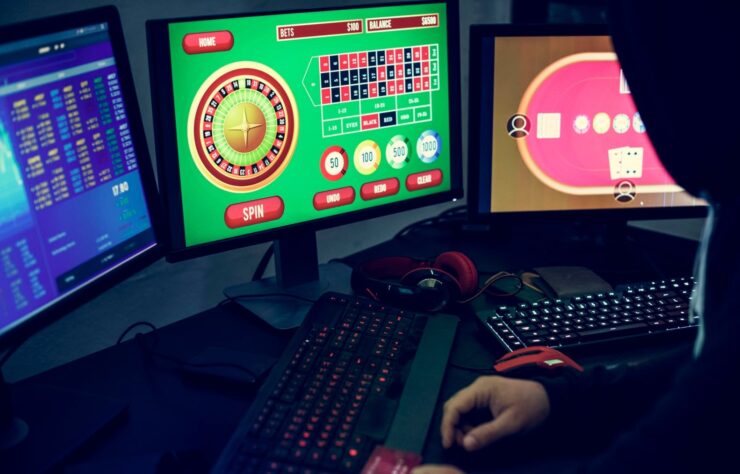
Not every casino game asks for the same kind of attention.
Slots are usually the easiest example because they ask very little from the player at the start. You open one, understand the theme in a second or two, and begin. There is no real barrier. No long decision tree.
No sense that you need to settle in before anything happens. That makes them good for short sessions and casual browsing, especially on larger platforms such as betway where players can move quickly between different styles of games without much friction.
Table games do something else. Even the simplest ones carry a slightly different mood. They feel more deliberate. Roulette has its own rhythm. Blackjack feels more hands-on. Baccarat, for many players, is less about action than about pace and atmosphere. You are not just pressing forward. You are following a structure.
Then live casino games shift things again. The moment a real dealer appears on screen, the platform feels different. A little slower, usually. A little more social, or at least more present. Some players like that because it breaks the automated feel that standard digital games can have. Others do not. That is exactly why variety matters. One person’s ideal session is another person’s reason to log off.
A wide selection makes the platform feel more alive
When there are enough different types of games in one place, the whole platform feels less static. That is probably the simplest way to put it. You do not feel trapped inside one mode. You can move around.
A player might begin with a few spins, get tired of that pace, and switch to roulette. Someone else might start with a live game, leave it after a while, and end up in a low-key slot just to keep things moving.
The point is not that every player uses every category. Most do not. The point is that the option exists, and that option changes how the platform feels even when it is not used. Good variety creates a sense that the session can keep evolving.
Without that, everything starts to flatten. One game turns into another version of the same game. One section looks too much like the next. After a while, it no longer feels like a choice. It feels like repetition dressed up in different colors.
Too much of the same thing does not really count as variety
This is where some platforms get it wrong. They stack huge numbers on the homepage. Thousands of games. Endless choice. But once you start looking properly, a lot of the selection is doing the same job. One slot has ancient gold and temples.
Another has frozen jewels and blue light. Another has fruit, but the structure is nearly identical. The names change. The artwork changes. The feeling does not change as much as the lobby wants you to believe.
Real variety comes from differences in experience, not just differences in appearance. That means having games that move at different speeds. Games that feel lighter or heavier.
Games that invite quick entry and games that ask for a little more patience. A crowded library is not automatically a rich one. Sometimes it just means the platform has learned how to look full. Players notice that faster than operators probably expect.
The lobby has more influence than people think

Game variety is not only about what is available. It is also about whether the player can actually feel that variety while moving through the site. A badly organised lobby can make even a strong library feel tiring. You scroll, you click, you back out, you forget where something was, and after a few minutes, the whole place starts to feel like work. That is usually the moment people stop exploring and fall back on whatever looked familiar first.
A better layout does not need to be clever. It just needs to be clear. Categories should make sense. Search should work properly. Featured rows should help rather than distract. New releases should be visible without pushing everything else out of sight.
When that part is handled well, variety feels useful. When it is not, variety becomes noise. That is why two casinos with similar game counts can feel completely different to use. One feels open. The other feels crowded.
Familiarity still does a lot of the work

For all the talk about new releases and constant updates, most people still drift toward things they already understand.
That is not laziness. It is just easier. Familiar formats ask less from you in the opening seconds. You do not need to learn the mood of the game, the logic of the layout, or the reason it was designed the way it was. You already have a rough map in your head.
That matters more online than people sometimes admit, because attention is usually split. People are on their phones. They are switching tabs. They are filling spare time, not preparing for a deep experience.
So yes, variety matters. But part of good variety is knowing that people often want recognizable entry points. The stronger libraries are usually the ones that balance the familiar with the slightly new, not the ones that chase novelty every second.
Why it matters in the long run
A player does not always leave because they are unhappy. Sometimes they leave because the session has nowhere else to go. That is where game variety quietly becomes one of the most important parts of retention. Not in a marketing sense. In a practical one.
If the current game no longer fits the mood, the platform needs another lane ready. Something slower, quicker, lighter, more focused, less repetitive, more direct. If that next step feels easy, the session continues. If it does not, the session ends.
That is why variety shapes the online casino experience more than people think. It is not only about having many games. It is about giving the player enough room to shift gears without breaking the flow. And in the end, that is usually what keeps a platform from feeling temporary.
Not the promise of endless content, but the sense that there is always another way to use it. If you want, I can make it even less detectable by roughening the rhythm further and replacing a few of the cleaner transitions that still sound “written.”