
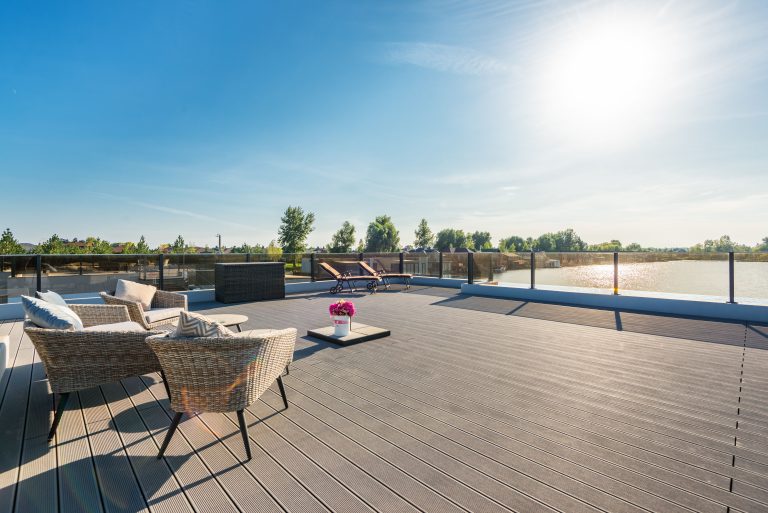
Choosing a deck is less like picking a paint colour and more like choosing a roof: the material affects how the space feels, how it ages and how much work it creates later. Timber offers genuine wood grain, easy cutting and a familiar repair process. Composite boards promise less refinishing and a more consistent appearance, but they bring their own installation rules and environmental questions.
There is no universal winner. My view is that well-specified timber remains the better choice when natural feel, repairability and lower embodied impact are priorities. A good capped composite board makes more sense when avoiding staining is worth paying for and the substructure can be built to the manufacturer’s specifications.
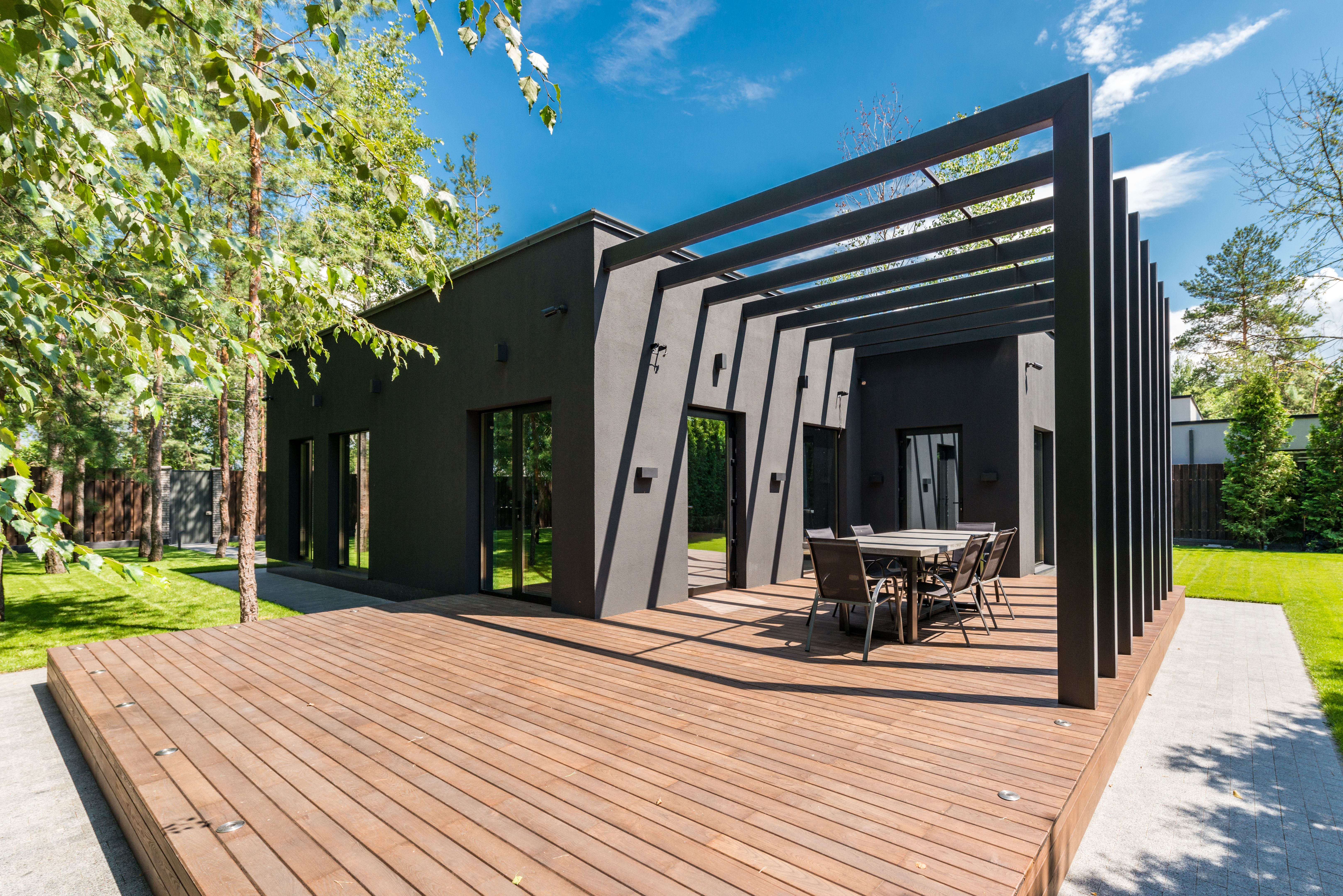
The short version: what are you really buying?
| Decision | Traditional timber | Composite boards |
|---|---|---|
| Appearance | Natural variation, grain and gradual silvering if left unfinished | Consistent colour and pattern, with possible fading over time |
| Routine care | Sweeping and cleaning; sealing or staining if you want to preserve colour and reduce weathering | Sweeping and periodic cleaning; normally no stain or sealant |
| Installation | Familiar to most carpenters; cut ends of treated timber need protection | Heavier and less stiff than wood in many formulations; spacing and fixing details are product-specific |
| Repair | Individual boards are relatively easy to cut and replace | Matching an aged board can be difficult, and proprietary clips may complicate repairs |
| Environmental picture | Renewable feedstock, but sourcing, treatment, transport and maintenance still matter | May contain recycled material, but plastics and manufacturing add impacts; recycling routes are not guaranteed |
The table is a guide, not a product specification. Composite formulations vary considerably, as do timber species and treatment methods. The details on the packaging, technical sheet and warranty matter more than the word “composite” on the front of a brochure.
Timber wins on feel, flexibility and straightforward repairs
Wood has an advantage that product photography cannot quite reproduce: it changes from board to board. The surface has warmth under bare feet, small marks can be sanded, and a damaged plank can usually be replaced without dismantling half the deck. For a period property or a garden where the deck needs to sit quietly among plants, that irregularity is often the point.
Timber is also forgiving during construction. A carpenter can trim it on site, adjust an edge around a post and work with ordinary woodworking tools. That does not mean every timber deck is simple. The frame is the part that tends to be forgotten, and a beautiful hardwood surface will not rescue underspecified or poorly ventilated joists.
For UK projects, the Timber Decking and Cladding Association recommends pressure-treated softwood deck boards to at least Use Class 3 for above-ground outdoor use, while structural support timbers generally need the more demanding Use Class 4 treatment. Its timber decking specification guidance is a useful check against a quotation that only names the board species and says nothing about the substructure.
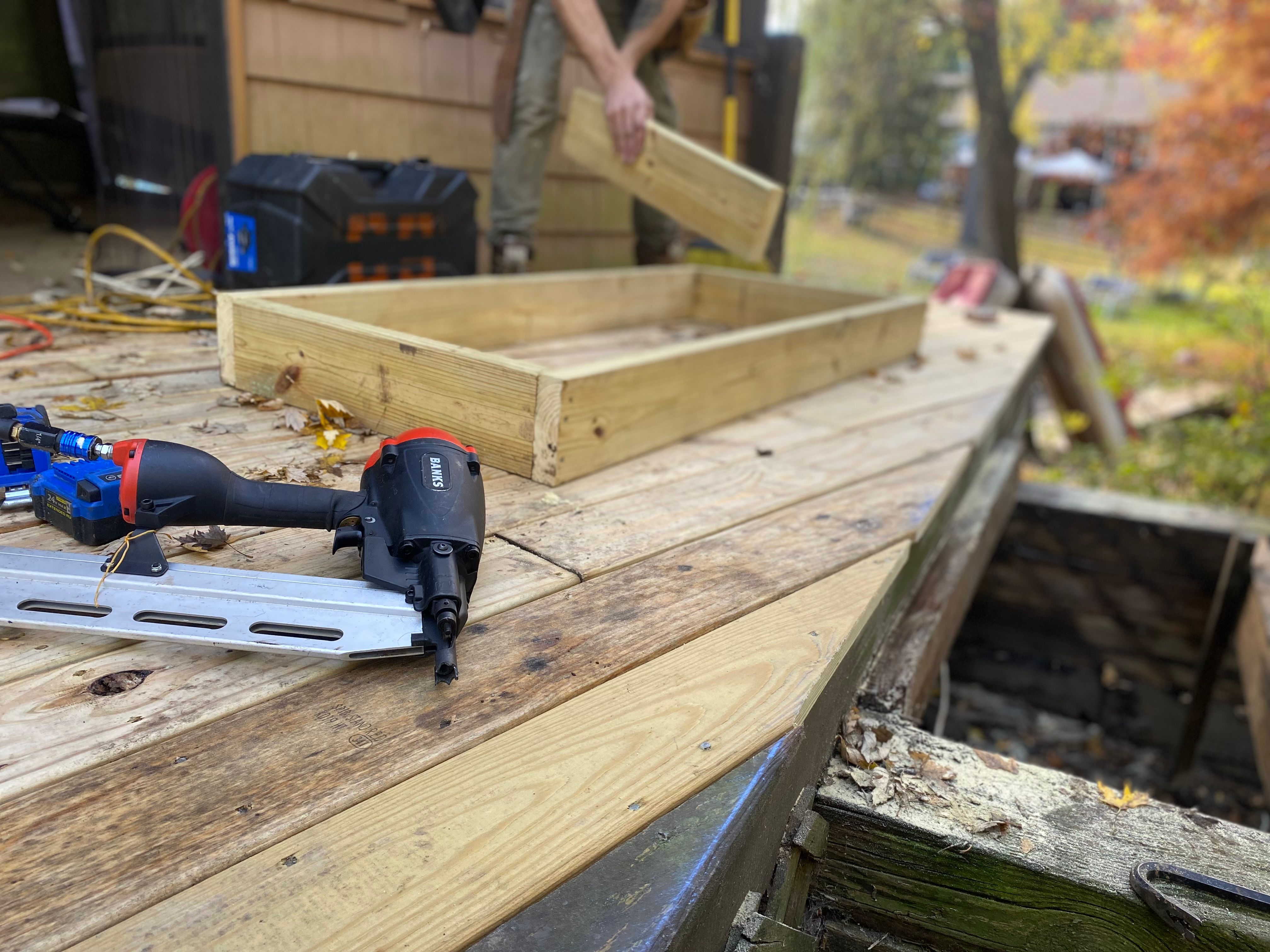
Composite reduces refinishing, not responsibility
The strongest case for composite is not that it is indestructible. It is that the owner can usually skip the recurring cycle of preparation, staining and colour restoration associated with a timber deck. For someone who wants to sweep the surface, wash it occasionally and leave it alone, that difference can be decisive.
But “maintenance-free” is an overstatement. Dirt, algae, food grease and sunscreen still land on the surface. Dark boards can become noticeably hot in strong sun, and a scratch, burn mark or stubborn stain may be more conspicuous because the surface colour is manufactured rather than naturally varied.
Independent testing reported by Consumer Reports’ decking buying guide makes the more important point: performance varies by product. Some composites resist stains well, while others can flex, scratch or perform less strongly than the best timber options. Treat a brand’s claims as a starting point, not as a substitute for checking joist spacing, span limits, slip data and warranty exclusions.
The detail that decides whether either deck lasts
Water is the common enemy, but it causes different problems in the two materials. Timber absorbs and releases moisture, so it can shrink, swell, check and warp. Composite boards contain plastic, which reduces some forms of moisture damage, but the wood fibres inside many boards do not make the material immune to damp or biological deterioration.
Movement from temperature is another reason composite boards cannot simply be laid like timber. Plastic-rich boards expand and contract along their length, so end gaps, perimeter clearances and fastener positions must follow the manufacturer’s system. Ignore those instructions and a deck can develop lifted ends, visible gaps or unwanted pressure around fixed objects.
Good timber detailing is no less exact. Build in a fall so water drains away from the building, leave the correct gap between boards, keep the underside ventilated and avoid trapping leaves against the frame. The TDCA notes that grooved boards are intended to help channel water; the grooves are not, by themselves, proof that a surface is slip-resistant.
Which material is safer in wet weather?

Neither timber nor composite is automatically non-slip. Leaves, algae and standing water can make either surface hazardous. Cleaning and drainage matter more than a decorative groove pattern.
For steps, ramps, pool edges or areas used by people with reduced mobility, ask for independently tested slip-resistance information rather than relying on the phrase “anti-slip”. A product’s test result should relate to the way the deck will actually be used, including footwear and wet conditions. The safest design may also include better lighting, a sensible fall and handrails; changing the board alone is not a complete risk assessment.
The environmental argument is more complicated than “recycled”
Composite is often presented as the greener option because it can include recycled plastic and reclaimed wood fibre. That is a useful attribute, but it is not a complete life-cycle assessment. The manufacturing energy, resin type, transport distance, expected service life and end-of-life route all affect the result.
Research comparing wood-plastic composites with solid wood has reached different conclusions under different assumptions. A comparative life-cycle assessment of terrace flooring materials found that regional pine performed better environmentally than the composite options it studied when lifespans were assumed equal, while composites could become more competitive when longer service life and recycling were credited. That is precisely why a recycled-content percentage should not be treated as a verdict.
Timber has its own questions: was it responsibly sourced, was it treated for the correct exposure, and how will treated offcuts be disposed of? A locally available, durable timber that is installed well may be a lower-impact choice than a heavily transported composite. Conversely, replacing poorly maintained boards repeatedly is not an environmental success just because the original material was wood.
Maintenance: what the calendar actually looks like
Every deck needs debris removed. Leaves hold moisture against the surface, fine soil feeds algae and blocked gaps interfere with drainage. A stiff brush and a mild cleaning solution are often more useful than an aggressive pressure washer, which can damage timber and roughen some composite surfaces.
With timber, decide early whether you like the weathered look. Leaving boards to turn grey can be perfectly reasonable if the timber is suitable and the detailing is sound. If you want the original colour, plan for preparation and periodic recoating. The TDCA’s deck-maintenance guidance distinguishes ordinary cleaning from the extra work involved in sealers, translucent stains and solid stains.
With composite, the maintenance burden is usually smaller but less repairable. Use the cleaner recommended for the specific board, remove spills promptly and keep hot objects away from the surface. Do not assume that a pressure washer, wire brush or household bleach is harmless simply because the board is synthetic.
Four questions to answer before ordering
1. Will the deck sit in full sun?
Dark composite boards can become uncomfortable on bare feet in hot weather. Timber can also heat up, but its surface and colour weather differently. Request a sample and leave it outside for several days before choosing a dark finish.
2. Are you prepared to refinish timber?
If the honest answer is no, do not buy timber on the assumption that future-you will become enthusiastic about sanding and staining. Choose a finish you can accept when it fades, or choose a board system designed for lower visual maintenance.
3. Is the frame new or already in place?
A replacement surface may still require joist checks, improved ventilation or closer support spacing. Composite boards often have different stiffness and fixing requirements from the timber they replace.
4. What happens if one board is damaged?
Ask the supplier how a board is removed, whether the clips remain available and whether the colour is likely to match after several years of weathering. A repair plan is more useful than a long warranty headline.
My recommendation
Choose traditional timber when you value natural variation, want the simplest on-site fabrication and are comfortable either allowing it to weather or maintaining the finish. Buy the right treated or durable species, insist on a properly protected frame and treat drainage as part of the design rather than an afterthought.
Choose composite decking when low refinishing requirements are genuinely more important than the feel of natural wood, and when you are willing to follow a specific installation system. Compare samples in sun and shade, check the technical data, and ask what the manufacturer says about stains, heat, joist spacing, slip performance and end-of-life disposal.
The best decision is usually made before the first board is delivered. A modest-looking deck with a dry, well-ventilated frame will age better than an expensive surface laid over trapped moisture. Material matters, but water management, workmanship and the owner’s tolerance for upkeep matter more.